



Wait, what? Wyoming lawmakers push to ban all electric vehicles by 2035
Trending
Housing prices have been declining, but 2022 wasn't catastrophic and 2023 is looking better
Trending
TekSavvy asks CRTC to review legality of Rogers-Vidéotron deal
Trending
Taxpayer tries to claim parking costs as medical expense, claiming discrimination for travelling short distances
Trending
-

-

-

-

-


Share this Story: Massive TFSA recontribution mistake puts taxpayer in CRA's crosshairs
Reviews and recommendations are unbiased and products are independently selected. Postmedia may earn an affiliate commission from purchases made through links on this page.
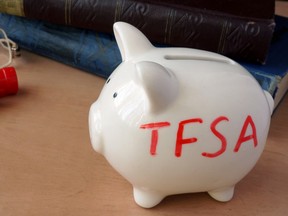
I’ve already made my 2023 tax-free savings account (TFSA) contribution … have you?
We apologize, but this video has failed to load. Try refreshing your browser, ortap here to see other videos from our team. Play Video
The new TFSA dollar limit is $6,500 for 2023. And if you’ve never opened a TFSA before, the new cumulative limit could be as high as $88,000 if you’ve been a resident of Canada and at least 18 years of age since 2009.
Sign up to receive the daily top stories from the Financial Post, a division of Postmedia Network Inc.
A welcome email is on its way. If you don't see it, please check your junk folder.
The next issue of Financial Post Top Stories will soon be in your inbox.
We encountered an issue signing you up. Please try again
Making my contribution was as easy as electronically moving funds from my bank account to my TFSA, which provides a lifetime potential of tax-free investment income and unlimited tax-free gains on the funds’ growth. My intention is to use those funds in retirement, but TFSA funds can be withdrawn, tax free, at any time, for any purpose, such as buying a new car, a wedding reception or a down payment on a home.
No matter what you choose to do with your TFSA funds, keep in mind that one of the biggest benefits of the TFSA, beyond the tax-free income and growth, is the flexibility to recontribute any withdrawn funds back to your TFSA, beginning the following calendar year. You’re also able to transfer funds from one TFSA to another, but it must be done via a direct transfer, rather than a withdrawal and recontribution.
Taxpayers who don’t appreciate the nuances of the TFSA recontribution or transfer rules, however, could find themselves in trouble with the taxman for overcontributing. That’s exactly what happened in a case decided in late 2022.
The taxpayer’s troubles began in early 2020, when, needing to move closer to his young daughter after separating from his wife, the taxpayer withdrew $50,000 from his TFSA with the intention of making an offer on a new home. He said he did this before actually finding a home because “in a hot housing market in which there were often bidding wars for the same home, a competitive bid necessitated that funds be in hand for an offer to be accepted within a very short period of time.”
The taxpayer quickly realized the housing market was simply “too hot for his financial wherewithal,” so he did what he assumed was “the reasonable thing to do” and deposited the same funds back into his TFSA on Feb. 6, 2020. Unfortunately, the taxpayer’s TFSA contribution room for the 2020 taxation year was only $10,000, such that the redeposit of $50,000 triggered an overcontribution for the month of February of about $40,000.
But things became even more complicated later that month when the taxpayer, in an attempt to consolidate two TFSAs into one account, transferred that same $50,000 from the TFSA into his regular savings account and then into a second TFSA on the same day.
From the taxpayer’s perspective, he was simply transferring funds from one TFSA to another. But from the Canada Revenue Agency’s perspective, the transfer via the savings account on Feb. 20, 2020, triggered a second TFSA contribution of $50,000 for the month of February 2020.
In the end, what was “simply an honest mistake” caused a massive 2020 overcontribution in the eyes of the CRA to the tune of $112,000. (The taxpayer made $22,000 of additional TFSA contributions during the rest of 2020).
Under the Income Tax Act, there’s a penalty of one per cent per month for each month there is a TFSA overcontribution. As a result, the taxpayer in July 2021 received a notice of assessment from the CRA, charging him a penalty tax of $6,270, along with $332 in penalties and interest.
The act, however, allows the CRA discretion to grant relief, and states that a CRA officer may waive or cancel the penalty tax if the excess arose through “reasonable error” and is corrected by the individual “without delay.”
The taxpayer wrote to the CRA to request it cancel the assessment, arguing that “he was not aware that redepositing the same funds that were withdrawn during the same taxation year would constitute additional contributions.”
The taxpayer’s request was denied by the CRA in September 2021 on the basis that even though his TFSA overcontribution was unintentional, it did not consider the taxpayer’s misinterpretation of the contribution rules to be a “reasonable error,” since the taxpayer had, back in 2013, already been granted relief on a TFSA overcontribution.
In October 2021, the taxpayer submitted a second request for the CRA to cancel the assessment, which was again denied. The taxpayer then took the matter to Federal Court, where the judge’s role is to determine whether the CRA officer’s refusal to exercise their discretion to deny the taxpayer relief was “reasonable.”
As in prior cases, a reasonable decision is one that is “based on an internally coherent and rational chain of analysis and that is justified in relation to the facts and law that constrain the decision maker.” Generally, a CRA decision is not set aside unless it contains “sufficiently serious shortcomings … such that it cannot be said to exhibit the requisite degree of justification, intelligibility and transparency.”
Arguing one’s general ignorance of the law is not, by itself, sufficient to demonstrate an error was reasonable. Rather, “reasonable error” is limited to situations where the overcontributions occurred for reasons outside the taxpayer’s control, which can include bank errors, physical disasters, civil disruptions, a serious illness or accident, or distress.

11 tax changes and new rules that will affect your finances in 2023

CRA tries to catch taxpayer who made an incorrect TFSA catch-up contribution

Five ways to take advantage of tax benefits when donating to charity
Paying taxes in instalments can bring trouble with the CRA if you make this mistake
The judge was sympathetic towards the taxpayer, but nonetheless concluded he was a “repeat overcontributor” and did not make a reasonable error in overcontributing in 2020, thus the CRA officer’s decision to deny him relief was rational.
“The threshold for the determination of a reasonable error is high as our tax rules are based on a self-reporting system that relies on taxpayers to understand or be informed of the law and to take reasonable steps to comply with (it),” the judge said. “For TFSA purposes, taxpayers are responsible for being aware of their contribution limits and for ensuring that their contributions comply with applicable rules.”
In the end, the judge simply felt the excess TFSA contributions were made by the taxpayer because of his misunderstanding of the rules, and not, therefore, the consequence of a reasonable error, which may have warranted relief.
Jamie Golombek, CPA, CA, CFP, CLU, TEP, is the managing director, Tax & Estate Planning with CIBC Private Wealth in Toronto. Jamie.Golombek@cibc.com.
_____________________________________________________________
If you liked this story, sign up for more in the FP Investor newsletter.
_____________________________________________________________
Copy Link
Email Facebook Twitter  Reddit
  Pinterest LinkedIn
  Tumblr
 Trending
-
Remote work 'doesn’t work' for younger staff, management, Jaime Dimon says
Wait, what? Wyoming lawmakers push to ban all electric vehicles by 2035

Housing prices have been declining, but 2022 wasn't catastrophic and 2023 is looking better
TekSavvy asks CRTC to review legality of Rogers-Vidéotron deal

Taxpayer tries to claim parking costs as medical expense, claiming discrimination for travelling short distances

Taxpayer tries to claim parking costs as medical expense, claiming discrimination for travelling short distances
Jamie Golombek: Start gathering the receipts you’ll need if you’re hoping to claim the medical expense tax credit
The CRA is cracking down on COVID-19 benefit payments as this taxpayer found out
Jamie Golombek: Three CRA reviews found taxpayer couldn't claim CRB based on income from an Airbnb rental







Comentários
0 comment